
Everett. Glaciers Shrink as Skykomish River Faces Rising Heat
When Mauri Pelto first started hiking into the North Cascades in 1984 to track glacier health, nine glaciers contributed meltwater to the Skykomish River. Today, only three persist, and one may vanish entirely within months.
Pelto’s annual fieldwork, now in its 43rd year, has evolved into the longest continuous glacier monitoring effort in the nation: the North Cascade Glacier Climate Project. Each summer, his core team of roughly six individuals ventures into the mountains for three weeks in July and August, collecting data on snow accumulation, ice thickness, and runoff from ten glaciers.
Between 1984 and 2012, the region’s glaciers shed roughly two feet of ice annually, on average. That pace accelerated dramatically in the following decade, with losses climbing to nearly five feet, six inches per year from 2013 through 2024. In total, more than 100 of the roughly 700 glaciers documented in the North Cascades in 1984 have vanished, most since 2015.
The three remaining Skykomish-fed glaciers are Columbia, Lynch, and Foss. Columbia sits at a lower elevation, nestled between Columbia Peak, Monte Cristo Peak, and Kyes Peak, just north of Blanca Lake. Lynch lies northwest of Mount Daniel, while Foss clings to the northeast flank of Mount Hinman.
Pelto notes that Columbia and Lynch, being the largest in the watershed, have remained focal points for repeated fieldwork over the past half-century.
Columbia showed the most pronounced retreat in 2026, pulling back by 50 meters and shedding an ice mass equivalent to a standard football field. Pelto attributed this to a notably warm summer across Snohomish County, which proved especially taxing for low-elevation glaciers like Columbia.
Foss, once more accessible, has become increasingly isolated. The last intensive field measurements were taken in 2006, and since then, two neighboring glaciers disappeared, complicating access. “It got too difficult to reach,” Pelto explained, “and just wasn’t worth the effort as it neared extinction.”
Once stretching over 500 meters in length, Foss had shrunk to a mere 100 square meters of ice by 2025.
Reduced glacial melt has directly affected the Skykomish. Less cold water entering the river during summer months has led to higher water temperatures and altered flow patterns. State standards call for stream temperatures not to surpass 16 degrees Celsius for more than ten consecutive days. Recent readings, however, have regularly exceeded 18 degrees for that same duration.
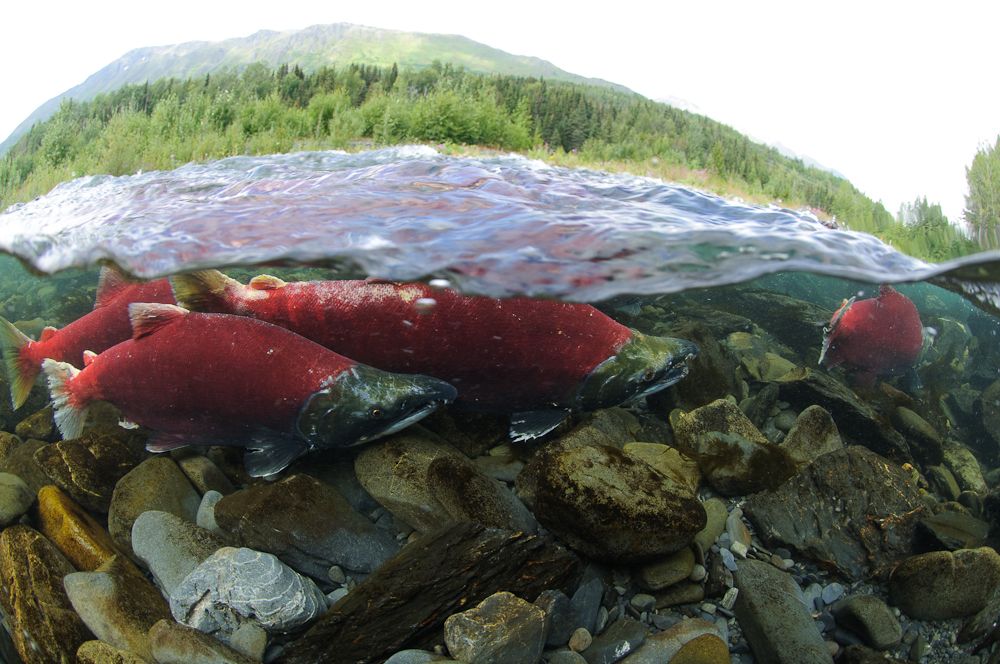
Pelto emphasized that salmon, dependent on temperatures between 13 and 18 degrees, begin to struggle around 20 degrees, and upstream migration halts altogether near 23 degrees. “When you miss a threshold like that, you’re technically out of compliance,” he said, though enforcement remains limited. “It’s reminiscent of the Endangered Species Act, there’s an expectation of action, but penalties or enforcement actions are rare.”
On flow volume, the Skykomish’s benchmark stands at about 500 cubic feet per second. Historically, the river has maintained that level with consistency, though recent trends suggest increasing vulnerability during peak summer demand.
Low river flows now persist for extended periods annually, reducing discharge to approximately 300 cubic feet per second. These diminished volumes exacerbate water quality issues by limiting the dilution of pollutants. Additionally, slower-moving water allows temperatures to rise more rapidly.
A local visual artist and science communicator, who serves as the art director for the North Cascade Glacier Project, merges artistic expression with scientific data to highlight the significance of glacial systems. She explained that this interdisciplinary approach has enabled her to share their research in various venues that might otherwise have been inaccessible.
For a recent project, she plans to integrate a painting depicting the Columbia, Lynch, and Foss glaciers along with the Skykomish River with two data visualizations. One chart will display the river’s discharge levels from July through September of 2023, while the other will track temperature fluctuations during that same three-month period.
The artist noted that visual media often engages audiences more effectively than raw data alone, potentially fostering a deeper emotional connection. While she works primarily as a visual artist, the project also includes contributions from photographers and creators using other media formats.
This artist has accompanied her father on annual glacial expeditions for nearly two decades. Over that time, she has developed a strong personal connection to the specific sites they visit each year. She observed that the Columbia Glacier left a particularly strong impression this year due to its rapid deterioration. Looking back at previous visits, the accelerating changes have made it visually apparent that these formations are not permanent.
She acknowledged the difficulty of separating emotion from the scientific observations. The tangible sense that these features are disappearing permanently was a major focus of their recent expedition.
Her father, a glaciologist, stated that each site holds special significance for both him and his daughter. Because they visit these locations annually together, the gradual loss of the glaciers represents a significant personal and scientific impact. He compared the situation to a surfer losing the specific waves at their preferred spot. While the beach and ocean would remain visually appealing, the dynamic power of the waves would be missing. Similarly, although the surrounding landscape would persist, the powerful presence of the glaciers would be absent.
He noted that while the specific call to action in this context can be challenging, disseminating the information remains crucial. He suggested that people are more likely to feel motivated to change their behaviors when they perceive that something important to them is being lost or is at risk.
The daughter expressed hope that the public will pay attention to and value the glaciers while they still exist. She emphasized recognizing the critical roles glaciers play in the state’s infrastructure, including hydropower, agriculture, drinking water supplies, and salmon populations. She stressed that once the glaciers are gone, there is no method to regenerate them.