
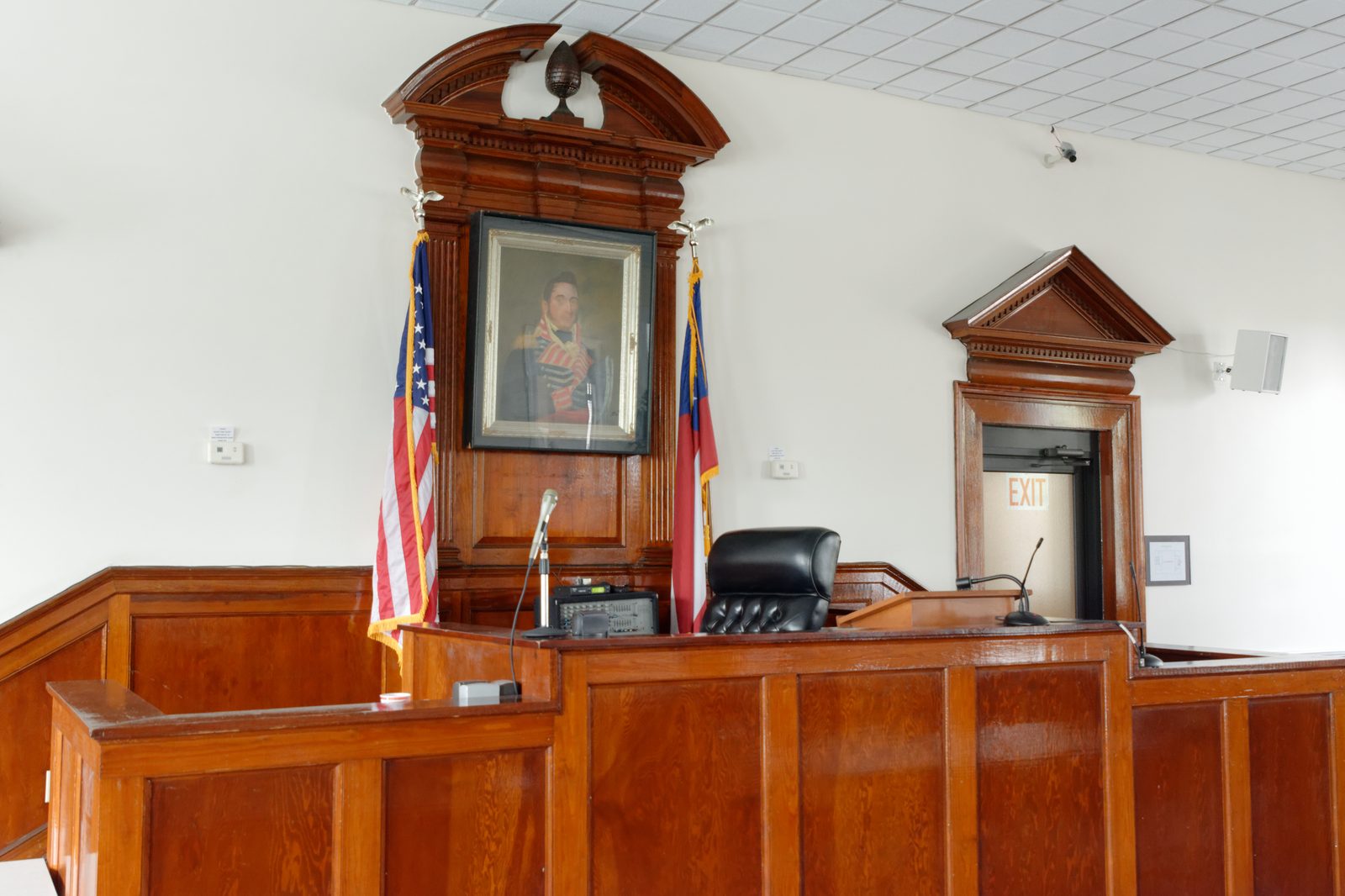
Judge Simon Barnhart has issued an order directing that a lawsuit concerning the release of search-warrant records be transferred to King County Superior Court. The presiding judge determined that Clallam County Superior Court faces a conflict of interest, concluding that even the appointment of a visiting judge would not sufficiently guarantee an impartial appearance.
“Unquestionably, this Court is conflicted and cannot take action on the substantive requests put before it by Petitioner,” Barnhart wrote in his October 16 order.
The decision moves the challenge regarding the court's refusal to provide documents outside of the local bench and administration. In July, Judge Barnhart upheld the withholding of the warrant logs during an internal review. The subsequent lawsuit seeks to have a different judicial officer overturn that decision and mandate access to the records.
The action was filed on August 7 against Clallam County Superior Court and Court Administrator Lacey Halberg, in her official capacity as administrator and public records officer. The dispute involves logs related to former Court Commissioner Brian Parker and Judge Brent Basden’s prior tenure as a court commissioner.
Judge Barnhart’s rationale for the transfer extends beyond the court’s status as a named respondent. He cited Halberg’s role in arranging visiting judges, the court's routine exchanges with neighboring counties, and apprehensions regarding potential further allegations against the institution.
“The use of a visiting judge to hear this matter in Clallam County would be an insufficient measure to ensure the appearance of fairness and to insulate this Court from further allegations by Petitioner that the Court has acted improperly,” he wrote.
Halberg’s responsibilities include coordinating the retention of a visiting judge, scheduling hearings, and providing documents to that judge. In this lawsuit, those duties would fall to an official whose own records denial is being challenged.
“Requiring Ms. Halberg, as a named party, to discharge those duties in this case, would be unreasonable and inappropriate,” Barnhart wrote.
He concluded that justice would be best served if the matter were administered by court personnel and decided by a judicial officer with no connection to Clallam County Superior Court.
The order also clarifies why Judge Barnhart looked beyond Jefferson and Kitsap counties, where Clallam frequently participates in judge trades. To maintain an appearance of fairness, he wrote, the case should be assigned to a court that does not regularly seek Clallam’s services and would be unlikely to do so.
The dispute began with a February 27 request for Parker’s search warrant logs covering his tenure through his February 2026 termination, and Basden’s commissioner-era logs for the period of 2007 through 2011.
As described in the lawsuit, the logs are chronological indexes of warrant applications presented to judicial officers and warrants they issued. Access would allow examination of how the court exercised its authority to approve searches.
Halberg denied both categories on April 10.
“Any such records are categorically exempt under GR 31.1 as chambers records, and therefore are not subject to disclosure and production,” she wrote. “This is the final communication you will receive in connection with this request.”
The denial identified no individual log, gave no location or custodian, and did not address whether portions could be released.
Internal review was sought on July 6. In the accompanying email, the petitioner also asked the court to clarify Judge Barnhart’s ability to hear the matter under the Code of Judicial Conduct, citing his prior notice recusal.
Judge Barnhart issued a memorandum on July 13 that left the specific request under review unaddressed. The judge affirmed the earlier decision by Halberg, determining that the documents in question constituted "chambers records." The judicial reasoning was absolute, stating that the logs served a single function: aiding judicial officers in approving search warrants. Because these documents were used exclusively by court officials and kept under the direct control of the chambers, the judge classified them as non-public.
The written decision did not specify which log was at issue or cite evidence proving who held custody of it. The memorandum also failed to respond to two key arguments presented in the petition: the vintage of the records related to Basden and the steps the county took to retrieve Parker’s log following his exit from the position.
The procedural framework governing this dispute, GR 31.1, became effective on January 1, 2016. This rule stipulates that access to records created prior to that date must be evaluated using other court rules, relevant statutes, and the common-law balancing test. The current lawsuit contends that the court was therefore unable to rely exclusively on the chambers-records exclusion in GR 31.1 to block access to records spanning 2007 through 2011.
A separate issue arises from correspondence involving Parker. On February 10, a county Human Resources Director informed Parker that the Superior Court could not find the search warrant log in his office. The director requested that Parker either identify the document's location or arrange for its return. Parker responded by confirming he possessed the log. The lawsuit argues that the court’s subsequent efforts to retrieve the document indicate it should be treated as an institutional record subject to public access. The plaintiffs are asking the court to mandate written confirmation of whether the log was returned and to identify its current custodian.
The application of the chambers-records exclusion also impacted a separate inquiry regarding emails exchanged between Basden and a former Adult and Juvenile Drug Court coordinator. After the coordinator was arrested in March, a request was filed for their communications dating from 2018 through 2024. Halberg denied this request on March 27.
Following a challenge to that denial, Judge Barnhart returned the matter on April 29. The judge required a determination on whether responsive emails existed and whether the coordinator had been functioning in an administrative or chambers staff capacity. That ruling necessitated further processing, and as of October 21, no emails between the two parties had been produced.
The lawsuit concerning the warrant logs, which is now proceeding in King County, seeks an order compelling disclosure, with any redactions to be narrowly tailored and supported by specific findings. Alternatively, the plaintiffs request the identification and judicial inspection of the records, or an order vacating the denials and requiring additional proceedings. The transfer of the case establishes the venue for challenging the court’s refusal, though it remains undecided whether the Clallam County Superior Court must ultimately open these records to public scrutiny.