
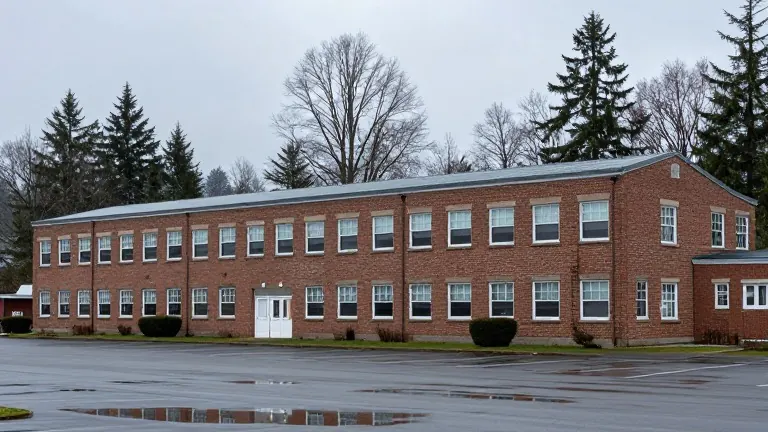
Washington’s juvenile detention system is facing significant challenges, with an audit revealing that nearly half of front-line staff at overcrowded facilities leave within their first year. The report from the Joint Legislative Audit and Review Committee paints a concerning picture of a system struggling to maintain safety and order due to capacity strains and insufficient training.
Staffing and Safety Strains
The audit identifies a direct correlation between rising populations and safety incidents at Green Hill School in Chehalis, which is located in Lewis County. Between 2022 and 2024, fights, assaults, and contraband incidents at the facility quadrupled. Staff members frequently report feeling unsafe and unprepared, noting that training provided by the Department of Children, Youth and Families does not adequately equip them to handle the pressures of an overcrowded environment.
Green Hill, which houses males aged 17 to 25, has a safe operating capacity of 180. However, state officials reported that the facility held 196 individuals at the end of June. For much of the past few years, the population remained well above 200. At one point in 2024, the crowding was so severe that the department transferred dozens of young men to an adult prison, a move that generated significant public backlash and legal challenges.
The report also highlights disparate treatment of youth of color and flaws in risk assessment tools that determine eligibility for release. Tana Senn, the secretary of the Department of Children, Youth and Families, acknowledged these issues during a recent briefing to lawmakers. She stated that her agency has long advocated for addressing overcrowding and emphasized the need for increased state funding to resolve these persistent problems.
Legislative Responses and Future Planning
Several factors have contributed to the ballooning population at Green Hill. A recent change in state law allows youth convicted of crimes to remain in juvenile detention until age 25, rather than being transferred to adult prison. Additionally, an increase in longer sentences for violent offenses such as murder and robbery means that beds remain occupied for extended periods, reducing turnover.
Last year, a state appellate court ruled that the overcrowding at Green Hill violated state law. Residents reported being confined to their cells for hours and using bottles for urination due to staffing shortages that also reduced rehabilitative programming. Despite these findings, the Legislature has not yet passed substantial policy changes to address the core issues.
In response to the crisis, the state opened Harbor Heights, a smaller facility located on the campus of an adult prison, to serve as a release valve for Green Hill. Lawmakers have also approved funding to design a new juvenile rehabilitation facility for fewer than 50 people. One leading option for this new center is the renovation of the shuttered Mission Creek Corrections Center in Mason County. If this project proceeds, it could lead to the closure of Harbor Heights.
Furthermore, legislators have tasked the department with planning for an additional facility east of the Cascades. This year’s budget includes funding for more than a dozen additional staff members at Green Hill to help alleviate the strain on current employees. While Echo Glen Children’s Center and Harbor Heights were operating below capacity at the end of last month, Green Hill continues to face the most extreme turnover and safety challenges. The audit estimates that for every 10 new residents at Green Hill, there are five to six additional assaults or fights and six drug or alcohol incidents.