
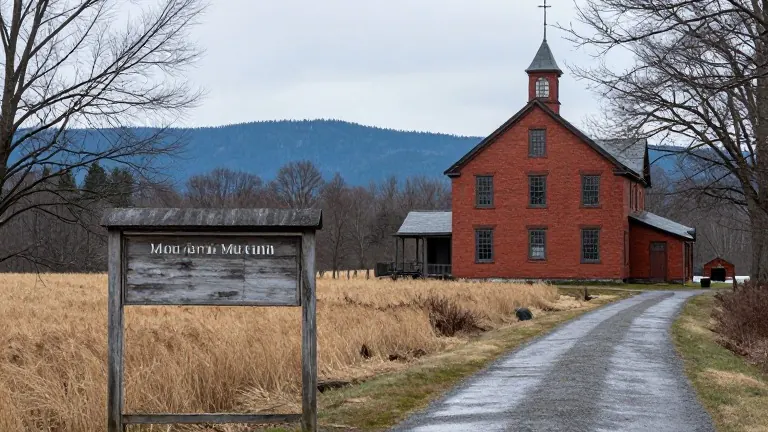
Mount Vernon, the historic estate of George Washington, is highlighting the dual nature of its legacy through a new public exhibition. The site, open daily from 9 a.m. to 4 p.m., invites visitors to examine the agricultural innovations pursued by the first president while simultaneously acknowledging the enslaved people who provided the labor for his plantation.
Agricultural Ambition and Labor
Following the American Revolution, Washington returned to Mount Vernon to focus on farming, a pursuit he considered central to his identity. Drawing parallels to the Roman leader Cincinnatus, who retired to his farm after serving the state, Washington aimed to establish himself as a leading American agriculturalist. The estate was divided into five distinct operating farms: Mansion House, Dogue Run, Muddy Hole, River, and Union. These sections served as testing grounds for crop rotation, livestock breeding, and other methods intended to create a sustainable agricultural economy.
Despite these modernizing ambitions, the operation relied heavily on enslaved labor. Approximately 90 percent of the workforce at Mount Vernon consisted of enslaved Africans and African Americans. Washington’s vision for productivity often resulted in long workdays and frequent changes to work processes, placing significant demands on the men, women, and children who sustained the plantation's wealth.
Complex Family Dynamics and Emancipation
The lives of the Washington family and the enslaved community were deeply intertwined, forming a complex plantation society. Although George and Martha Washington did not have biological children together, they raised a large household that included step-children, step-grandchildren, and extended relatives. Martha Washington brought her two youngest children from her first marriage to the estate, though both died by the 1780s. The family experienced both joyful births and untimely deaths, a common reality in the 18th century, which led to nieces and nephews joining the household to provide care and economic security.
Washington’s views on slavery evolved over his lifetime. In the 1760s, he did not question the institution, but by the 1780s, he sought to lessen its harshness. By the 1790s, he actively sought to free some laborers, expressing frustration with the system's inefficiencies. In a letter to Robert Morris dated April 12, 1786, Washington wrote that he wished more sincerely than anyone to see a plan adopted for the abolition of slavery.
Upon his death, Washington’s will freed 123 enslaved individuals. However, many others remained in bondage because he was legally unable to free them at that time. The new exhibit, which is included with admission, provides an in-depth look at these lives, emphasizing that Washington’s farming legacy is inseparable from the experiences of the enslaved community at Mount Vernon.