
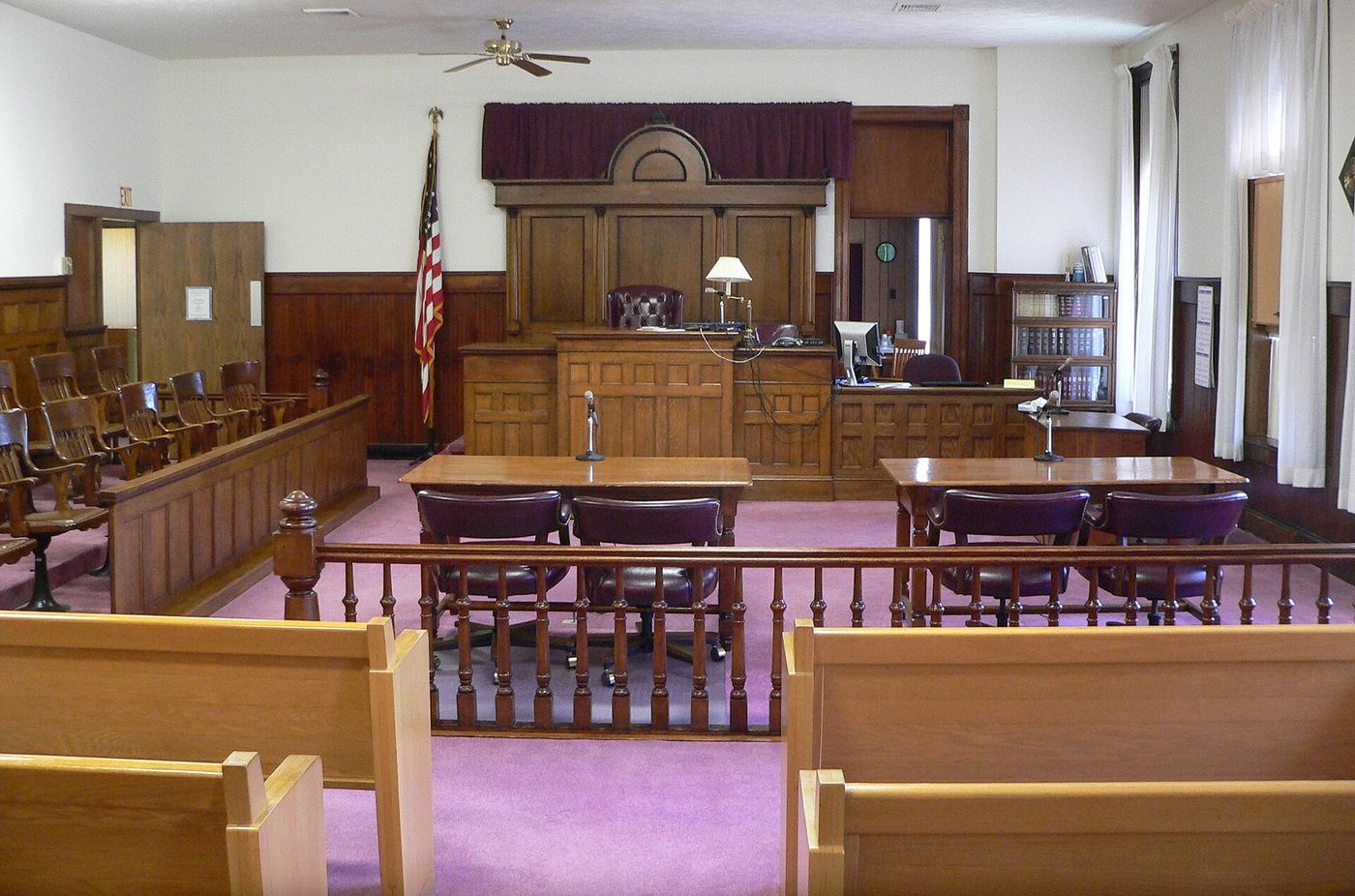
Recent proceedings in Clallam County Superior Court have prompted widespread concern regarding the fairness of the local judicial system. Public confidence in the court has reached a low point following the appointment of Commissioner Brian Parker, a decision made by Judge Brent Basden that proceeded despite significant warning signs.
Adding to the unease is Judge Basden’s pattern of allocating taxpayer money to former associates with ethical conflicts, alongside a concerning frequency of his decisions being overturned by appellate courts.
When a judge's personal connections or history of rulings suggest a lack of impartiality, citizens often feel they have little recourse. While broader reform and electoral changes take time, Washington State law offers an immediate mechanism for individuals to shield their own cases from potential judicial bias.
Disqualification Procedure
In Washington superior courts, any party or attorney involved in a proceeding may recuse a judge by providing notice to that judge. This action must be taken before the judge issues any discretionary ruling regarding the case.
The specific requirements are outlined in RCW 4.12.050, which states:
(1) Any party to or any attorney appearing in any action or proceeding in a superior court may disqualify a judge from hearing the matter, subject to these limitations: (a) Notice of disqualification must be filed and called to the attention of the judge before the judge has made any discretionary ruling in the case. (b) In counties with only one resident judge, the notice of disqualification must be filed not later than the day on which the case is called to be set for trial. (c) A judge who has been disqualified under this section may decide such issues as the parties agree in writing or on the record in open court. (d) No party or attorney is permitted to disqualify more than one judge in any matter under this section and RCW 4.12.040 . (2) Even though they may involve discretion, the following actions by a judge do not cause the loss of the right to file a notice of disqualification against that judge: Arranging the calendar, setting a date for a hearing or trial, ruling on an agreed continuance, issuing an arrest warrant, presiding over criminal preliminary proceedings under CrR 3.2.1, arraigning the accused, fixing bail, and presiding over juvenile detention and release hearings under JuCR 7.3 and 7.4. (3) This section does not apply to water right adjudications filed under chapter 90.03 or 90.44 RCW. Disqualification of judges in water right adjudications is governed by RCW 90.03.620 .
Know Your Local Court Rules
It is also advisable to review the local court rules for the superior court. In Clallam County, additional requirements are found under Local Court Rule 40(f).
The terminology may vary by county. In Clallam, the rule refers to the disqualification notice as an “affidavit of prejudice”, which is what it was called 8 years ago, prior to legislative changes to RCW 4.12.050.
Court Commissioners Cannot Be Disqualified By Notice
Unlike judges, court commissioners are not subject to disqualification by statute.
Instead, if you believe a commissioner has made an erroneous or biased ruling, RCW 2.24.050 allows any party to a case to request that a superior court judge review the orders and judgments made by that commissioner. This proceeding is called a motion for revision of a commissioner’s order.
Empowering Citizens
Washington State law provides specific mechanisms that allow individuals to address concerns within the court system. While broad reforms and changes in leadership require significant time, these established procedures offer an immediate option for people to safeguard their own legal proceedings against potential judicial prejudice.