
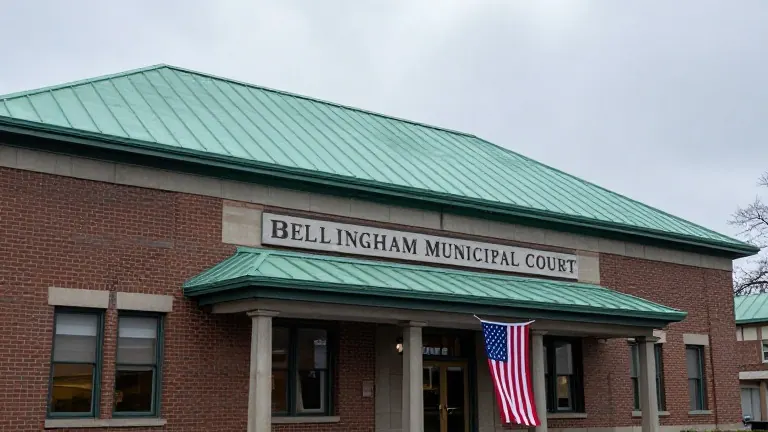
BELLINGHAM, Wash. — A man convicted of murdering a local woman in the late 1980s has received his prison sentence, concluding a decades-long investigation that relied on modern forensic technology to identify the killer.
Court records indicate that Darren O’Neall, 66, will serve a 12-year term for the homicide of Wendy Aughe. The sentencing marks the final legal step in a case that remained unsolved for roughly 36 years before new evidence emerged.
Breakthrough in Cold Case
Aughe was last seen in 1987 after she failed to collect her daughter from a babysitter. Her disappearance prompted a search that led officers to her residence, where they identified dried pools of blood in her bedroom. At the time, investigators noted that O’Neall had been observed driving Aughe’s vehicle, which initially connected him to the scene.
While the initial link was circumstantial, the case gained traction in 2023 due to advancements in DNA technology. Laboratory analysis confirmed that the blood evidence recovered from Aughe’s bedroom belonged to O’Neall. This forensic confirmation provided the definitive proof needed to secure a conviction.
Extradition and Prior History
O’Neall was not immediately available for the Whatcom County proceedings. He was serving a 135-year sentence in an Oregon jail for separate charges of kidnapping and child sexual assault. In 2023, he was extradited from Oregon to face the murder charge in his home region.
The defendant has a significant criminal history prior to this conviction. O’Neall was previously found guilty of the 1989 killing of Robin Smith, a 21-year-old woman from Pierce County. That earlier conviction established a pattern of violent offenses that prosecutors cited during the current trial.
The resolution of the Aughe case highlights the growing role of updated forensic tools in solving cold cases in the Pacific Northwest. By re-examining evidence collected in the 1980s with current standards, investigators were able to bridge the gap between the initial disappearance and a final verdict.
O’Neall will now begin serving his 12-year sentence, which will be calculated in relation to his existing incarceration terms. The family of the victim has been notified of the sentencing, bringing a degree of closure to a tragedy that affected the Bellingham community for nearly four decades.
Legal experts note that the length of the sentence reflects both the severity of the crime and the time already spent in custody for other offenses. The case serves as a reminder that investigations into unsolved homicides can remain active for years, often waiting for the right technological opportunity to provide answers.
The Whatcom County Prosecutor’s Office praised the collaboration between local law enforcement and state forensic labs in identifying the perpetrator. This successful outcome may encourage similar reviews of other unsolved cases in the county where biological evidence was preserved but not fully analyzed with modern methods.
For the Aughe family, the sentencing represents a significant milestone after years of waiting for justice. The case had gained renewed public attention following the 2023 extradition, with community members expressing support for the victim and her relatives throughout the legal process.
O’Neall will be transported to a state correctional facility to begin his sentence. The court has scheduled a brief post-sentencing hearing to address administrative matters related to his incarceration and the coordination with his Oregon sentence.
The closure of this file allows investigators to shift focus to other pending cases in the district. However, the Aughe murder remains a prominent example of how persistence and scientific innovation can lead to accountability for crimes committed long ago.